
Mantra Japa for Beginners: A Simple Daily Practice

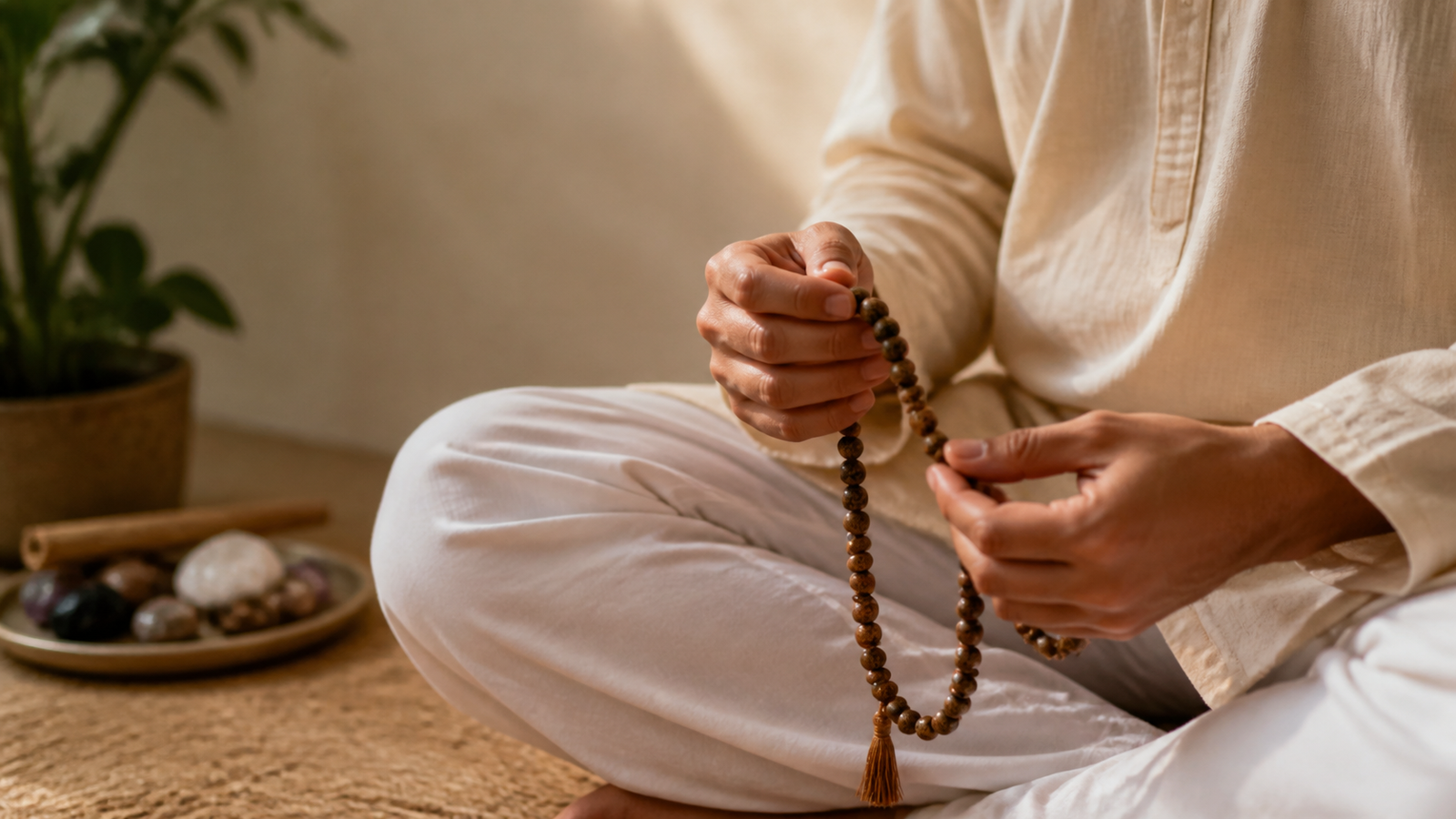
Mantra japa is the repeated chanting of a sacred sound, name or phrase with attention and respect. It is practiced in many Indian spiritual traditions as a way to steady the mind, deepen devotion and create a disciplined daily rhythm. For beginners, the practice can be very simple: choose a mantra, sit comfortably and repeat it with awareness.
A 108-bead Rudraksha Mala can help count repetitions without distraction. Each bead represents one chant. This allows your attention to stay on the sound and meaning of the mantra instead of constantly checking numbers.
Choosing a Mantra
Some beginners start with well-known mantras such as “Om,” “Om Namah Shivaya,” or “Om Namo Bhagavate Vasudevaya.” Others chant a mantra given by a guru, family elder or priest. If you already follow a tradition, it is best to stay within that guidance.
Choose a mantra that you can pronounce respectfully and repeat comfortably. Do not rush into complex mantras without learning their pronunciation and meaning. A simple mantra chanted with sincerity is better than a difficult mantra repeated carelessly.
How to Use a Mala
Hold the mala gently and move one bead after every repetition. Many practitioners use the thumb and middle finger while avoiding the index finger, though customs vary. Start from the bead next to the guru bead and continue until you complete the circle.
When you reach the guru bead, pause. If you want to continue, turn the mala around instead of crossing over it. This small rule teaches awareness and respect. Keep the pace steady and let the chanting remain clear.
Creating a Daily Routine
Pick a time that you can maintain. Early morning, before sleep or after a bath are common choices, but consistency matters more than timing. Begin with five to ten minutes. If 108 repetitions feel too much, start with a smaller count and gradually increase.
Use a clean seat or mat. Keep your phone away if possible. Sit with a relaxed body and attentive mind. If thoughts come, do not fight them. Gently return to the mantra and the bead in your hand.
Common Beginner Mistakes
The first mistake is rushing. Japa is not a race. The second is expecting immediate dramatic results. Mantra practice develops slowly through repetition, faith and patience. The third is changing mantras too frequently because of online suggestions. Stability helps the mind settle.
Keep your mala clean and store it respectfully. Some people use one mala only for japa and avoid wearing it casually. Follow your family or teacher’s guidance when available.
Silent, Whispered or Spoken Japa
Japa can be practiced aloud, softly whispered or silently in the mind. Spoken japa helps beginners because the sound keeps attention steady. Whispered japa is gentler and useful when other people are nearby. Silent japa is subtle, but it may be harder for beginners because the mind can drift.
Try each method and observe which one helps you stay present. The best method is the one that keeps your chanting respectful, clear and consistent in your daily life.
Track Progress Gently
Some practitioners like to mark their daily japa on a calendar. This can be motivating, but avoid making it stressful. If you miss a day, restart calmly the next day. Spiritual discipline grows through patience, not guilt. The mala is there to bring you back, one bead at a time.
If your mind is very restless, begin with fewer repetitions and focus on clear pronunciation. Over time, increase the count naturally. A peaceful short practice is more helpful than forcing a long session with frustration.
Important note: Mantra japa is a spiritual practice based on tradition and personal faith. It does not replace medical, legal, financial or psychological advice.